
 By
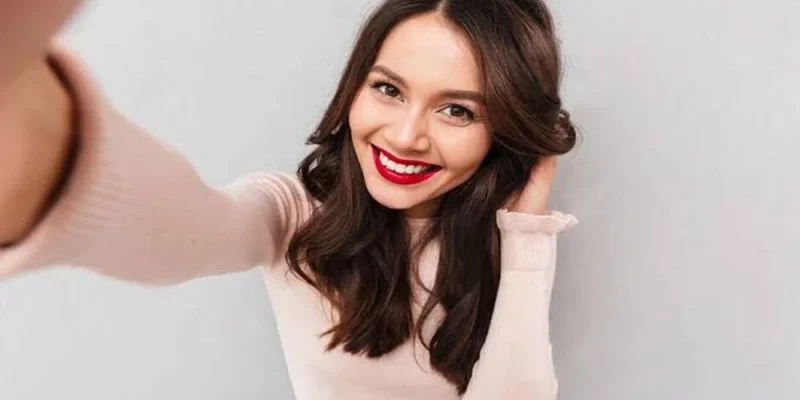
A close phone selfie is not a neutral measurement against which every professional portrait should be corrected. Camera distance can change the apparent relationship between facial features, even when the person has not changed. If a headshot looks different from a familiar selfie, consider how the two photographs were made before attributing the difference to retouching. The capture position belongs in that comparison.
Your nearest feature is closer to the camera than the rest
A photograph reduces a three-dimensional face to a flat image. Features projecting towards the camera are closer than features farther back. At a short camera distance, that difference in depth has a more noticeable effect on their relative appearance. Moving the camera away changes the relationship between those distances. It can therefore change the proportions visible in the picture without changing the face.
The original research letter Nasal Distortion in Short-Distance Photographs: The Selfie Effect, published in JAMA Facial Plastic Surgery in 2018, examines this through a mathematical model. Its authors describe how short camera distances can increase the apparent ratio of nasal breadth to facial breadth. This is evidence about photographic projection, rather than a rule for judging anyone’s appearance or a way to diagnose what happened in an individual edited image.
The practical point does not require assigning a percentage to your own photograph. You do not know that your face, angle or camera arrangement matches the model’s assumptions. Nor should a business portrait enquiry turn into an anatomical measurement exercise. The paper provides a reason to take camera distance seriously when comparing images, while leaving the actual photographic arrangement to be discussed on its own terms.
Lighting, expression, head angle and finishing can also make two portraits differ. Camera distance is one relevant factor, not an explanation that cancels all the others. A photographer should not use perspective as a universal answer to every concern. Equally, a client should not treat a familiar close-range view as proof that every different proportion was created later by an editor.
Matching face size on screen does not match camera position
Consider a professional comparing two images side by side. In one, they held a phone close enough to frame the face directly. In the other, a photographer stood farther away and framed the portrait differently. The person crops the second image so both heads appear equally large on the screen. That makes the comparison easier to view, but it does not make the original capture positions equal.
A crop changes which portion of the existing image is displayed. It does not move the camera that recorded it. The relative projection already present in the image remains part of that image. Enlarging or shrinking the two portraits to the same overall face width therefore cannot establish that they should show every feature in the same proportion.
This is also why a lens number alone is an incomplete answer. Camera position and framing need to be understood together. A photographer may choose a lens that supports the intended framing from a particular working distance. The client’s useful concern is the resulting perspective and experience, rather than requiring one focal length because someone called it the universally correct portrait lens.
A phone is not automatically unsuitable for every portrait, and a professional camera does not automatically solve every close-distance effect. The situation should be described in terms of how the picture was made. Avoid turning the comparison into an equipment contest. A thoughtful capture arrangement is more informative than the brand printed on the camera.
Keep the two files’ histories distinct as well. If one selfie has a filter or other processing applied, say so when using it as reference. There is no need to prove that every visible difference comes from one cause. Honest context prevents a conversation about perspective from becoming an argument over a photograph whose earlier treatment nobody has identified.
Choose a capture relationship before requesting a shape change
During a headshot enquiry, explain what you notice in concrete language. You might say that close phone photographs make the centre of your face look more prominent than photographs taken from farther away, and that you want to understand the capture arrangement. That invites a photographic discussion. “Make my face match this selfie” instead asks for an outcome without specifying whether it concerns distance, expression, lighting or alteration.
A prospective client speaking with Indigo Visual’s portrait photographers can bring this concern to the appointment conversation. Ask how the planned framing and working distance will be approached. The photographer can explain the proposed setup and discuss the kind of portrait being commissioned. You are choosing a deliberate relationship between person and camera, rather than presenting a close selfie as a compulsory geometric standard.
If perspective is a particular concern, raise it before capture. A change in camera position belongs to the photography itself. Trying to force an already finished image to imitate another viewpoint is a different request, with different implications for the person’s appearance. Do not let an unexplained comparison quietly become permission for facial reshaping.
Keep your personal preferences available without turning them into claims about which picture reveals your only true face. You may prefer the expression in one photograph and the framing in another. Describe those preferences separately. The photographer can work with an understandable choice more readily than an instruction that combines several images into a single supposedly objective reference.
Make the distance choice while the camera can still move
Imagine arriving for the appointment with a particular concern about close-range photographs. Explain it before the first setup is settled. The photographer can discuss where the camera will stand and how the face will be framed from that position. You do not need to request a dramatic angle or an artificial expression to make the concern understandable. The subject of the discussion is the physical space between you and the camera.
If the proposed arrangement feels too close, say so while a change remains practical. The photographer can assess whether a different position and suitable framing fit the session. A small room or a particular composition can constrain those choices, so discuss the actual setup rather than demand a universal distance taken from a research example. The choice should serve this portrait and remain comfortable enough for you to participate.
Once the working position is agreed, let the photographer compose the portrait from there. The camera may stand farther from your face than your phone ordinarily does, while the finished image still gives the face enough space in the frame. That is a deliberate capture choice. It addresses the viewpoint directly, before a later editing request has to imitate a position the camera never occupied.




Comments