
 By
By 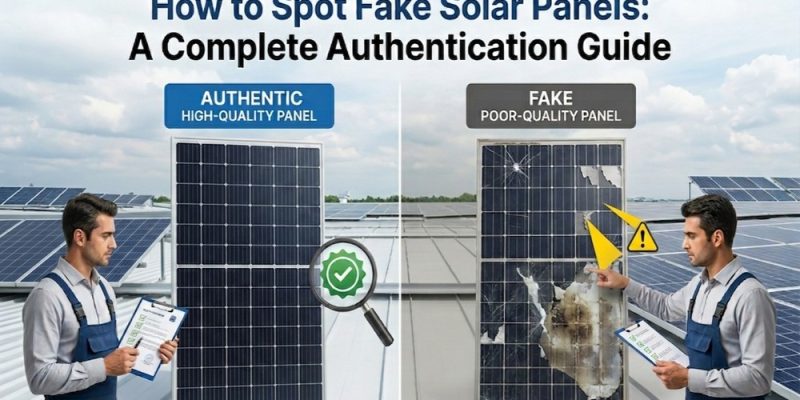
India’s push toward renewable energy is stronger than ever, with the government targeting 40% of electricity from renewable sources by 2030. Solar energy sits at the heart of this mission, but so does a growing problem: counterfeit solar panels flooding the market.
Fake solar panels are more common than most buyers realize. Price-sensitive consumers are especially vulnerable, often unable to tell the difference until it’s too late. If you’re planning to invest in solar, knowing how to spot fake solar panels before purchasing can save you thousands.
Why Solar Panel Quality Check Matters
Solar panels are long-term investments. A substandard panel doesn’t just underperform; it can be a safety hazard. With counterfeits being sold at prices comparable to genuine products, performing a solar panel quality check before buying is no longer optional.
Here’s what to look for:
1. Inspect for Body Defects: Fake panels are built with substandard materials. One of the earliest signs is a protective coating that begins peeling within days. Any visible surface deterioration before installation is an immediate red flag.
2. Look for Cracked or Chipped Cells: Grade B or low-quality solar cells often show visible cracks, chips, or flaking. In authentic panels, soldering is fully automated – minimizing breakage. Manual soldering, common in counterfeits, leaves behind irregular joints, debris, or visible wire inside the module.
3. Check Solar Cell Alignment: Misaligned solar cell strings are a common trait in fake panels. While misalignment doesn’t always impact performance immediately, it signals poor manufacturing standards – and usually means other components are compromised too.
4. Examine the Tempered Glass: Genuine panels use high-quality tempered glass that resists scratches and impact. Scratches on the glass cover indicate poor storage or inferior glass quality. Minor scratches cause shading; deep ones compromise light transmission and long-term solar panel durability significantly.
5. Verify Scribed Labels, Barcodes & Solar Panel Certification: Per IEC (International Electrotechnical Commission) standards, every legitimate solar module must carry a valid barcode on the back for traceability. Counterfeit manufacturers often use broken or printed-on barcodes. A simple test: apply a little alcohol to the barcode – if it peels off, the panel is fake.
Solar panel certification is equally important. Always ask for documentation proving IEC or BIS certification. If a seller hesitates or provides vague paperwork, walk away.
6. Check Color and Weather Resistance: Authentic solar panels are predominantly blue. Additionally, genuine panels are weather-resistant by design – capable of withstanding rain, dust, and heat. If a panel shows early signs of weather damage or fading, its authenticity is questionable.
Quick Checklist Before You Buy
Conclusion
Counterfeit solar panels waste your money, reduce energy output, and can pose serious safety risks. The simplest way to avoid all of this? Buy from a certified, trusted manufacturer.
Waaree, India’s largest solar panel manufacturer with 600+ franchisee partners nationwide, is a reliable example of what authentic, certified solar panels look like – full IEC compliance, verified barcodes, and documented warranties. Using brands like Waaree as your benchmark when evaluating any solar panel purchase is a smart starting point.
By following these solar panel quality check steps and verifying solar panel certification before purchase, you protect your investment and ensure clean, reliable energy for decades to come.











Comments