
 By
By 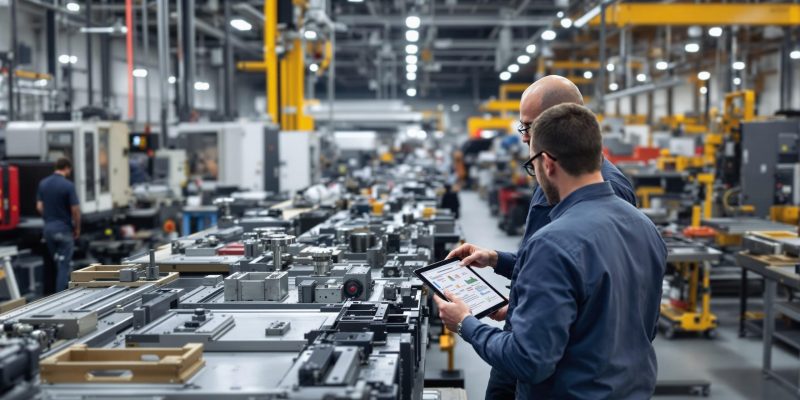
Contract manufacturing plays a central role in modern production landscapes, where companies seek specialized partners to handle complex fabrication needs. This approach allows businesses to focus on core competencies while outsourcing intricate processes like die-cutting and assembly to experts. Firms in sectors such as medical devices and general manufacturing often turn to contract manufacturing for its efficiency in producing custom components with tight tolerances. Pepin Manufacturing stands as a reliable example in this field, with decades of experience delivering precision solutions tailored to diverse applications.
The process begins with material selection, where substrates are chosen based on specific requirements for durability, conductivity, or protection. From there, techniques like rotary die-cutting enable high-speed production of uniform shapes, ideal for large volumes. Flatbed die-cutting complements this by managing detailed designs that demand exacting accuracy.
Advanced precision cutting further refines edges and maintains consistency across materials, including medical-grade adhesives and urethanes. Contract packaging rounds out the workflow, involving labeling, kitting, and sealing to prepare products for distribution. These steps integrate seamlessly to support scalable operations, from prototypes to full runs.
Key Processes in Contract Manufacturing
Precision die-cutting forms the backbone of many contract manufacturing operations. Rotary methods excel in efficiency for repetitive tasks, cutting through layers of materials to create components with repeatable dimensions. This technique suits applications needing speed without sacrificing quality, such as electrode production, where electrical conductivity depends on precise layering. Flatbed approaches handle smaller batches or complex geometries, allowing for adjustments in pressure and alignment to achieve clean results.
Beyond cutting, lamination adds value by combining materials for enhanced properties. Adhesive-backed films, for instance, bond conductive elements to substrates, ensuring longevity in electrotherapy devices. Urethane formulations provide non-marring surfaces that protect against scratches in industrial settings. Assembly services tie these elements together, incorporating custom shapes and thicknesses to meet functional demands. Pepin Manufacturing demonstrates this integration through its focus on end-to-end fabrication, where each phase aligns with client specifications to minimize waste and optimize performance.
Applications of Contract Manufacturing Across Industries
Contract manufacturing extends its reach into medical and commercial fields, addressing unique challenges in each. In electrotherapy, custom electrodes require materials that conduct electricity reliably while adhering comfortably to skin. Conductive films and gels are layered precisely to support therapeutic devices, highlighting the need for partners skilled in handling sensitive substrates.
Commercial products benefit similarly from tailored fabrication. Lint removal tools, for example, involve assembling rollers with adhesive sheets designed for repeated use in veterinary or retail environments. Protective urethanes find roles in manufacturing lines, where custom pads prevent surface damage during handling. General industries leverage these capabilities for components that demand tight tolerances, such as seals or gaskets in machinery.
This versatility stems from adaptable processes that scale according to project size. Small runs allow testing of new designs, while larger productions maintain cost-effectiveness through streamlined workflows. The emphasis remains on delivering components that integrate smoothly into final products, reducing downtime and enhancing reliability.
Maintaining Quality Standards in Contract Manufacturing
Quality control underpins successful contract manufacturing, starting with rigorous material inspections and extending through final testing. Standards ensure components meet industry benchmarks, with processes monitored for consistency. This includes verifying tolerances to prevent deviations that could affect performance.
Facilities equipped with modern technologies facilitate this oversight, enabling real-time adjustments. From initial design consultations to post-production reviews, the goal centers on exceeding expectations without compromise. Pepin Manufacturing exemplifies this commitment, having built a reputation over 30 years for precision and dependability in converting services.
Contract manufacturing continues to evolve, driven by demands for innovation in materials and techniques. Partners that prioritize accuracy and efficiency position themselves as integral to supply chains, supporting growth in competitive markets. Through specialized expertise, this model fosters advancements in product development across sectors.









Comments